
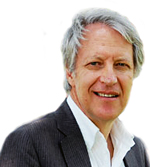
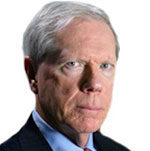



 Panel discussion on scientific cooperation between EU and Russia. Photo: FWM
‘Successful cooperation between Russia and Europe’
Members of the European Parliament have lent their support to joint groundbreaking Russian and European scientific studies in medicine.
Published: February 25, 2019, 3:11 pm
On 21 February an international conference titled EU-Russia “Release-activity phenomenon: application prospectives in medicine and technology” was held in the European Parliament. An international group of scientists from France, UK, USA, Norway and Russia met to discuss an idea put forward by Russian Professor Oleg Epstein on cooperation.
Epstein, who opened the conference, said that release-active drugs, and especially release-active antibodies, open up new opportunities in medicine. The modifying effect of these on an original substance can be used in technology to develop new materials, especially in nanotechnology.
Several members of the European Parliament representing different countries (UK, France, Germany, Romania), as well as members of the Belgian Parliament attended the round table dedicated to the phenomenon of release-activity medicine and acknowledged the importance of this research.
The conference host and member of European Parliament Bill Etheridge said: “This is an example of successful cooperation between Russia and the EU in the period of complicated relations between our countries. In the era of information society, when communication links actually erase state borders, this is an excellent example of how scientific activity can become a unifying motive, a point of contact and interaction in the establishment of political cooperation between the countries of Europe and the Russian Federation. We, as politicians, should encourage and develop such contacts between scientists of our countries to solve the global issues of humanity in the field of public health maintenance.”
The MEP from France, Dominique Bilde, underlined that it was very important to support cooperation between Russia and EU in the scientific sphere. She stressed the importance of the fight against diabetes which is one of the most dangerous and widespread diseases, especially in France.

Scientists discuss release-active drugs known as RADs, European Parliament. Photo credit FWM
Professor Sebastian Johnston from the Imperial College in London noted how products containing release-active antibodies that boost immune proteins may possess antiviral/anti-inflammatory effects which could make them attractive for the treatment of illnesses induced by rhinoviruses, such as asthma exacerbations.
The world-famous French Professor Jean-Claude Chermann, who discovered the human immunodeficiency virus, confirmed the findings of his British colleague, highlighting that “release-active antibodies can potentially be used as a part of combined therapy of viral infections including those caused by viral strains resistant to standard medicines”.
An expert in experimental diabetics treatment, professor Bernard Portha, explained that complex drugs containing release-active antibodies are effective in significantly improving glucose homeostasis.
David Coburn, a member of European Parliament from Scotland said: “Innovations often face difficulties that are associated not only with the novelty of study approach, but also with its implementation, and often – with untimely acceptance by the scientific community, because breakthrough technologies usually transform the existing paradigm of scientific knowledge. The history of science is full of examples when novel achievements have been ignored for decades before their acknowledgement, let alone implementation.
“Now we face a lot of medical challenges that require urgent solutions, since they affect human life and health. We should fully support all the promising breakthroughs, with adequate attention paid to the quality of the related work, without doubt.
“There is solid scientific evidence of the relevance of research work carried out in the area of ultra-high dilutions of substances, despite the fact that the understanding of the underlying processes is still difficult. We as politicians should support these extraordinary investigations. The main thing I see here is that Russians and West work together and that’s great.”
MEP France Jamet said: “It was a very interesting conference. Diabetes is a disease that has been well-known for a long time and I’m happy that nowadays there are new ways to deal with it using release-active drugs. Also politicians should make their contribution in the development of scientific cooperation. And today I can say for sure that cooperation between Russia and European Union exists and it is continued”.
MEP Nathan Gill said: “Usually it is difficult for politicians of the European Parliament to attend this kind of scientific events because of lack of time, and especially one lasting three hours. But I enjoyed this conference and I am really excited by what I have seen and what I have heard. Particularly so, because I’m diabetic myself.”
Gill emphasized that “cooperation in the areas of science and medicine is a good example for us politicians, because scientists and medical specialists work for people”. Gill pointed out that diseases know no borders, and in this regard medical work is especially important because medical scientists do what patients really need.
Dr Mikhail Putilovsky explained the results of clinical research sponsored by Materia Medica Holdings. During the last 20 years in collaboration with other leading international research institutes, Materia Medica has created a biotechnological platform based on technologically processed antibodies. It has already resulted in a number of innovative drugs for treatment of various diseases including infections, diabetes, urological and neurological disorders.
As a result of the conference, EP deputies signed a communiqué stating that “today humankind faces global problems in public health protection” but the conference participants believe that the presented scientific data on the release-activity phenomenon have been convincing.
The field itself is relevant and certainly should be developed further as part of a promising and potentially groundbreaking technology.
All rights reserved. You have permission to quote freely from the articles provided that the source (www.freewestmedia.com) is given. Photos may not be used without our consent.
Consider donating to support our work
Help us to produce more articles like this. FreeWestMedia is depending on donations from our readers to keep going. With your help, we expose the mainstream fake news agenda.
Keep your language polite. Readers from many different countries visit and contribute to Free West Media and we must therefore obey the rules in, for example, Germany. Illegal content will be deleted.
If you have been approved to post comments without preview from FWM, you are responsible for violations of any law. This means that FWM may be forced to cooperate with authorities in a possible crime investigation.
If your comments are subject to preview by FWM, please be patient. We continually review comments but depending on the time of day it can take up to several hours before your comment is reviewed.
We reserve the right to delete comments that are offensive, contain slander or foul language, or are irrelevant to the discussion.
Europe

US Moves to Control Russian Gas Flows to Europe via Nord Stream
Amid soaring energy prices, behind-the-scenes negotiations between Washington and Moscow point toward a dramatic shift in global energy politics: the United States is positioning itself to act as an intermediary controlling Russian gas deliveries to Europe.

How the UK is Undercutting US Peace Efforts
Former British diplomat Ian Proud has strongly condemned the UK government’s decision to invite Ukrainian President Zelensky for a state visit in 2027, labeling the move a "deeply unhelpful and cynical step" designed to undermine upcoming American-led peace negotiations.

German Chancellor Merz Holds EU Budget Hostage
Political opponents and financial analysts have intensified their criticism of German Chancellor Friedrich Merz following his threat to block the European Union’s next seven-year budget due to funding for Ukraine.

UK Braces for Blackout Apocalypse
The British state is openly conditioning the country for multi-day darkness, water failure and chaos — and it is making sure only its own voice reaches citizens when the grid dies.

Hackers Raise Temperatures in French Blood Banks
France’s national blood service said hackers accessed control systems overnight on Monday and raised temperatures and defrosting thresholds to “very high levels” at three cold stores holding vital blood products for over a million patients.

Supermarket Freezers Hacked Across At Least Seven European Countries
Supermarkets in Belgium, Sweden, Luxembourg, Ireland, the Netherlands, Finland and Estonia reported overnight refrigeration failures on 1–2 November 2026, with freezers and fridges remotely forced into defrost mode or set to extreme heat. Retailers discarded large quantities of chilled and frozen food after units reached 50°C (122°F) or higher in some locations.

EU Protests Continue Over Living Costs, Education, and Housing
Hundreds of thousands of people took to the streets across France, Germany, and Portugal this weekend in a widening wave of discontent focused on the high cost of living, underfunded schools, military conscription, and a severe housing crisis.

Czech Parliament Votes to Abolish Broadcasting Fees
In a decisive first-reading vote, the Czech Parliament has approved legislation to abolish mandatory broadcasting fees for public television and radio, marking a significant break from the traditional license-fee model that has long funded public service media across much of Europe.

UK Researcher Finds Ukraine’s Military Losses Far Exceed Russia’s
A PhD student at King’s College London’s Department of War Studies has argued that Ukraine has suffered significantly higher irretrievable casualties than Russia since the full-scale military operation began, challenging the widespread media narrative that Russian forces are taking the heavier toll.

No comments.
By submitting a comment you grant Free West Media a perpetual license to reproduce your words and name/web site in attribution. Inappropriate and irrelevant comments will be removed at an admin’s discretion. Your email is used for verification purposes only, it will never be shared.