



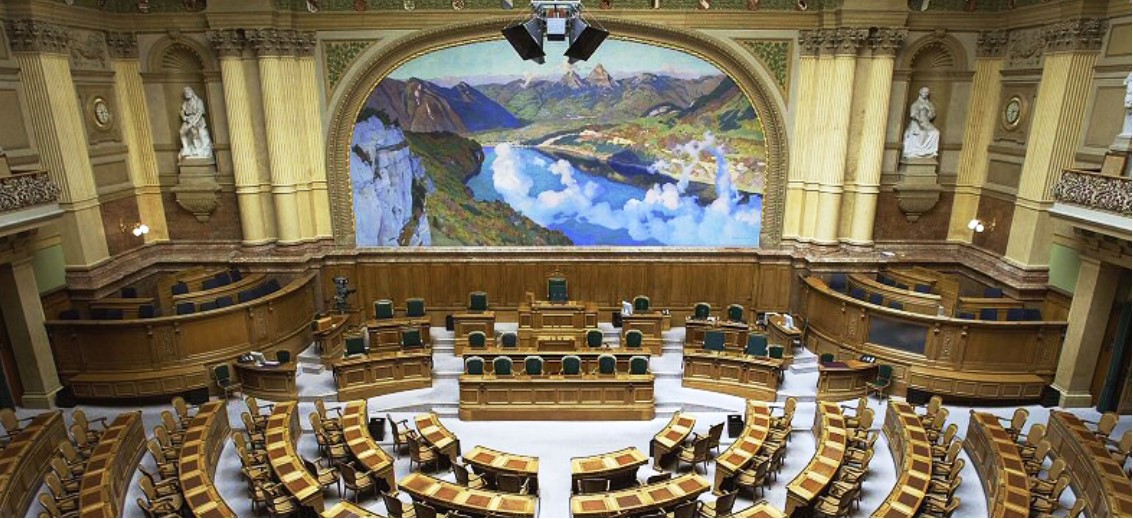
 Chamber of the Swiss National Council. Wikipedia
After failed referendum Swiss anti-immigration party fears EU takeover
After a failed sovereignist referendum in Switzerland on the encroaching powers of Brussels, the largest party in the Swiss parliament warns that the country is now facing a "massive erosion" of their unique democracy.
Published: December 2, 2018, 6:48 am
A long-running dispute over the EU’s “Agreement on the Free Movement of Persons” have been brewing between Switzerland and the EU. The agreement, signed in June 1999, allows EU citizens to live and work in Switzerland, and vice versa.
In November 2010 Swiss voters approved a referendum to deport foreigners who commit serious crimes in Switzerland.
Switzerland has more than 120 bilateral agreements that govern its relations with the European Union. It has gained access to the European single market by inking various such agreements that include control over its boundaries and immigration.
But according to the EU, deporting EU citizens for any reason – even crime – is seen to be a violation of Switzerland’s treaty obligations. The Swiss parliament, seeking to avoid economic reprisals, then watered down their law to please the EU.
Thus, in February 2014, when Swiss voters approved a referendum to reintroduce quotas for immigration from EU countries, the EU warned that any restrictions on access to the Swiss labor market would violate the agreement on the freedom of movement of persons, and threatened “serious consequences”.
Supporters of the quotas for foreigners argued that foreign workers were driving down wages and inflating demand for housing, health, education and transport, but the Swiss parliament eventually ignored voters’ concerns after being pressured by Brussels.
The EU has been increasing their demands on Switzerland to keep its borders open, making the recognition of Switzerland’s SIX Swiss Exchange, the fourth-largest stock market in Europe, contingent on Swiss acceptance of the EU framework agreement on free movement.
Switzerland’s current stock exchange agreement with the EU expires at the end of the year and failure to renew it would deprive the Swiss exchange of EU-based business that generates more than half its volume.
Bloomberg News noted the dilemma facing Swiss business leaders: “The Swiss government now faces the prospect of choosing between two evils: agree to the EU framework deal only to have it torpedoed by voters in a referendum, or renege on the treaty and risk reprisals from Brussels that hurt the economy.”
The EU has also been insisting on an even more comprehensive “framework agreement”, including greater powers for the European Court of Justice (ECJ). If Switzerland agrees, the ECJ would outrank the Swiss Supreme Court as the final arbiter of legal disputes in the country.
The Swiss People’s Party (SVP) is worried about the encroaching EU meddling: “The SVP rejects a one-sided submission to EU institutions, aimed at establishing an institutional connection of Switzerland to the EU apparatus, with a dynamic EU legal takeover and, ultimately, the subordination of Switzerland to the EU Court of Justice. A dynamic adoption of EU law would be another massive erosion of our direct democracy.”
In February 2018, Swiss public television SRF reported that the European Commission handed over a 19-page “sin list” of “Swiss violations of EU law” to the government.
But despite EU pressure or perhaps because of it, Swiss voters rejected the recent referendum on the “self-determination” initiative, put forward by the eurosceptic SVP, the largest party in the Swiss parliament. Two-thirds (66.2 percent) of voters in the November 25 referendum opposed the SVP initiative.
SVP leaders had argued that the new law was necessary to safeguard national sovereignty from further encroachment by supranational organisations such as the European Union and the United Nations, but the measure was attacked by a coalition of Swiss business groups.
According to them, access to international markets for the export-dependent country is paramount. “Ultimately, it is about maintaining prosperity in Switzerland and keeping the companies and jobs here,” said Monika Rühl, director of the business group Economiesuisse.
The proposal’s defeat comes ahead of pending decisions by the Swiss government over whether to sign the controversial UN Migration Compact.
The sponsor of the sovereignist referendum proposal, SVP MP Hans-Ueli Vogt, expressed surprise at the scale of the defeat — a rare setback for the SVP, one of the most successful anti-EU parties in Europe — but said he would continue to fight against “creeping EU accession”.
SVP MP Adrian Amstutz has warned that the Swiss parliament’s new deportation law would become worthless if the country signs away its independence to the Brussels. “According to the parliament’s implementation of the law for the deportation initiative, courts would have the possibility to put aside a deportation — even in the case of the most serious offenses — via the hardship clause. Current legal practices show that judges would frequently make use of this option. As a consequence, hardly any foreign criminals would be deported.”

Christoph Blocher in 2010 as an honorary guest at the Swiss National Trachtenfest (folk costume festival) in Schwyz. Wikipedia
In November 2014 already, the European Court of Human Rights (ECHR) prohibited Switzerland from sending Afghan asylum seekers back to Italy. Although Italian authorities had agreed to take them back, the ECHR ruled that doing so would violate Article 3 of the European Convention on Human Rights (Prohibition of Inhuman and Degrading Treatments) because of overcrowding and poor conditions at Italian asylum facilities.
SVP leader Christoph Blocher criticized the ECHR for ignoring the principle of subsidiarity, which holds that decisions should be taken, if possible, at the local level: “Don’t we trust federal judges to decide on human rights issues? We had those principles written into our constitution well before the ECHR. The problem with the convention is that it decides things from far away. The consequences, what happens next, don’t concern the judges.”
Martin Schubarth, a former Swiss federal judge, said the ECHR had acted in an undemocratic way. “It is unacceptable that a small panel of [ECHR] judges, who generally lack the expert knowledge about the [Swiss] legislative authority, handle matters in an undemocratic way instead of the [Swiss] authority itself.”
La Liberté, a newspaper based in Fribourg echoed his concerns: “The object of the initiative was very legitimate: it was about national sovereignty and its relationship with international law in a globalized world.”
The Geneva-based L’Express reported that the failure of the SVP referendum does not bode well for future legal wrangles: “The SVP suffered a defeat because it failed to mobilize and convince beyond its base. The voters wanted a pragmatic assessment between international law and national law. Depending on the situation, one or the other should apply. The definitive prevalence of one over the other, on the other hand, is not shared by the majority.”
La Tribune de Genève commented: “What the Swiss have supported this Sunday is a pragmatic, negotiated, piecemeal approach to our national interests. Voting is in no way a declaration of love to a European Union in crisis.”
The Swiss People’s Party said that despite the loss, the referendum “brought a welcome and suppressed debate about the relationship between Swiss law and international law and the importance of direct democracy.
“First of all, the SVP demands that Switzerland not join the UN migration pact. We are counting on the pledges of the representatives of the other parties, that at the very least it is presented to the parliament with the aim of holding a referendum on the matter, so that Swiss voters can have their say about such a far-reaching pact.
“Secondly, the SVP rejects a one-sided submission to EU institutions, aimed at establishing an institutional connection of Switzerland to the EU apparatus, with a dynamic EU legal takeover and, ultimately, the subordination of Switzerland to the EU Court of Justice. A dynamic adoption of EU law would be another massive erosion of our direct democracy.”
All rights reserved. You have permission to quote freely from the articles provided that the source (www.freewestmedia.com) is given. Photos may not be used without our consent.
Consider donating to support our work
Help us to produce more articles like this. FreeWestMedia is depending on donations from our readers to keep going. With your help, we expose the mainstream fake news agenda.
Keep your language polite. Readers from many different countries visit and contribute to Free West Media and we must therefore obey the rules in, for example, Germany. Illegal content will be deleted.
If you have been approved to post comments without preview from FWM, you are responsible for violations of any law. This means that FWM may be forced to cooperate with authorities in a possible crime investigation.
If your comments are subject to preview by FWM, please be patient. We continually review comments but depending on the time of day it can take up to several hours before your comment is reviewed.
We reserve the right to delete comments that are offensive, contain slander or foul language, or are irrelevant to the discussion.
Europe

NOAA Predicts Zero Sunspots for Almost the Whole 2030s
CLIMATEThe United States' government scientific organization, the National Oceanic and Atmospheric Administration (NOAA), predicts zero sunspots from 2031 to 2040. This is an extreme situation that has not occurred in as long as humanity has been counting sunspots, and it leads us into uncharted territory in terms of our solar system. However, this prediction aligns with the warnings of the world-renowned solar researcher Valentina Zharkova for many years, who indicated in 2019 various signs of this catastrophic phenomenon, including the extreme hailstorms we have seen in Europe and the world this summer. The forecast and various observations this year give cause for very significant concern. In this unique analysis, Free West Media explains why.
European Nationalist Parties Forge Cooperation Ahead of EU Elections
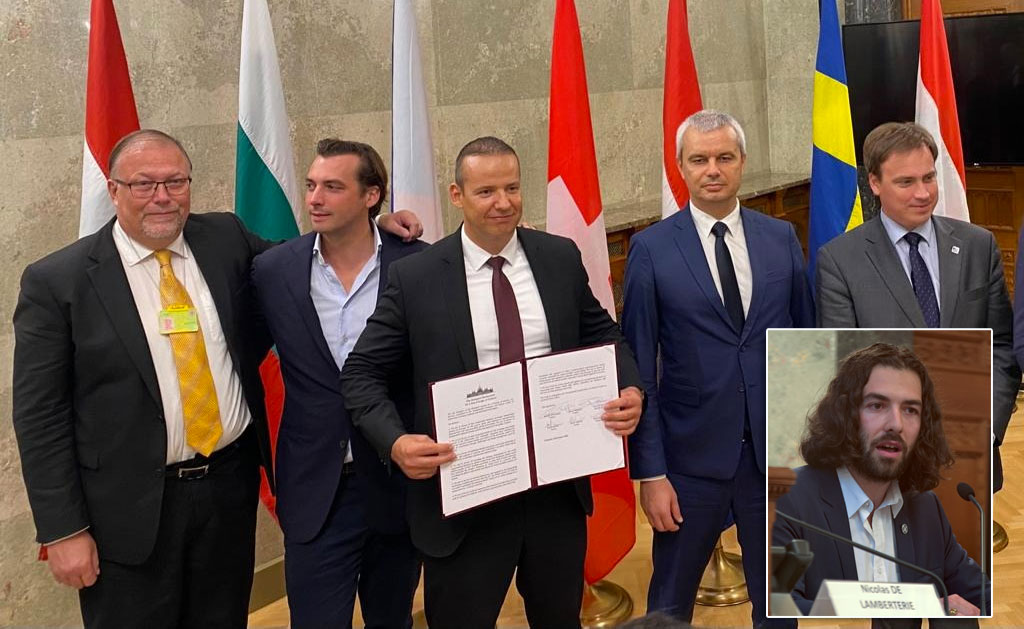
EUROPEAN ELECTIONSOn Saturday, August 26, representatives of six European nationalist parties gathered in Budapest. The meeting was initiated by the Hungarian party Mi Hazánk and took place in the national parliament. Representatives of the parties signed a joint declaration that not only reaffirms the parties' friendship but also their unity on a range of complex political issues. A surprisingly clear and radical manifesto was established. The hope is that this cooperation will lead to success in the EU elections and eventually result in the formation of a group in the European Parliament. For Swedish nationalism, this meeting marks a success as Sweden, for the first time, has a party represented in a leading nationalist cooperation in Europe. Free West Media was present at this historic event.
Turkey Believes Sweden Hasn’t Done Enough
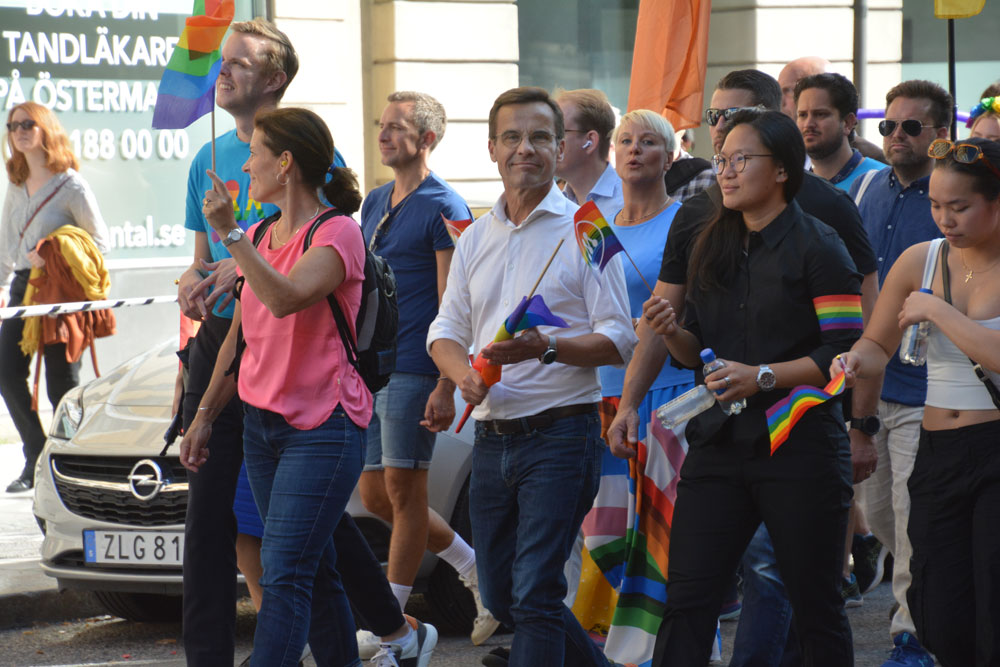
Sweden will have to wait a bit longer for NATO membership, according to Turkey's Justice Minister Jilmaz Tunc. First, Sweden must extradite the "terrorists" Turkey wants and stop the desecration of the Quran.

Swedish Weapon Takes Down Russia’s Best Attack Helicopter
The Russian attack helicopter Ka-52 is considered one of the world's best and has struck fear in Ukraine, where it has hunted down tanks and other armored vehicles, often beyond the range of many light anti-aircraft systems. However, it has met its match in the Swedish air defense missile system RBS 70, which has quickly led to significant losses for the Russian helicopter forces.
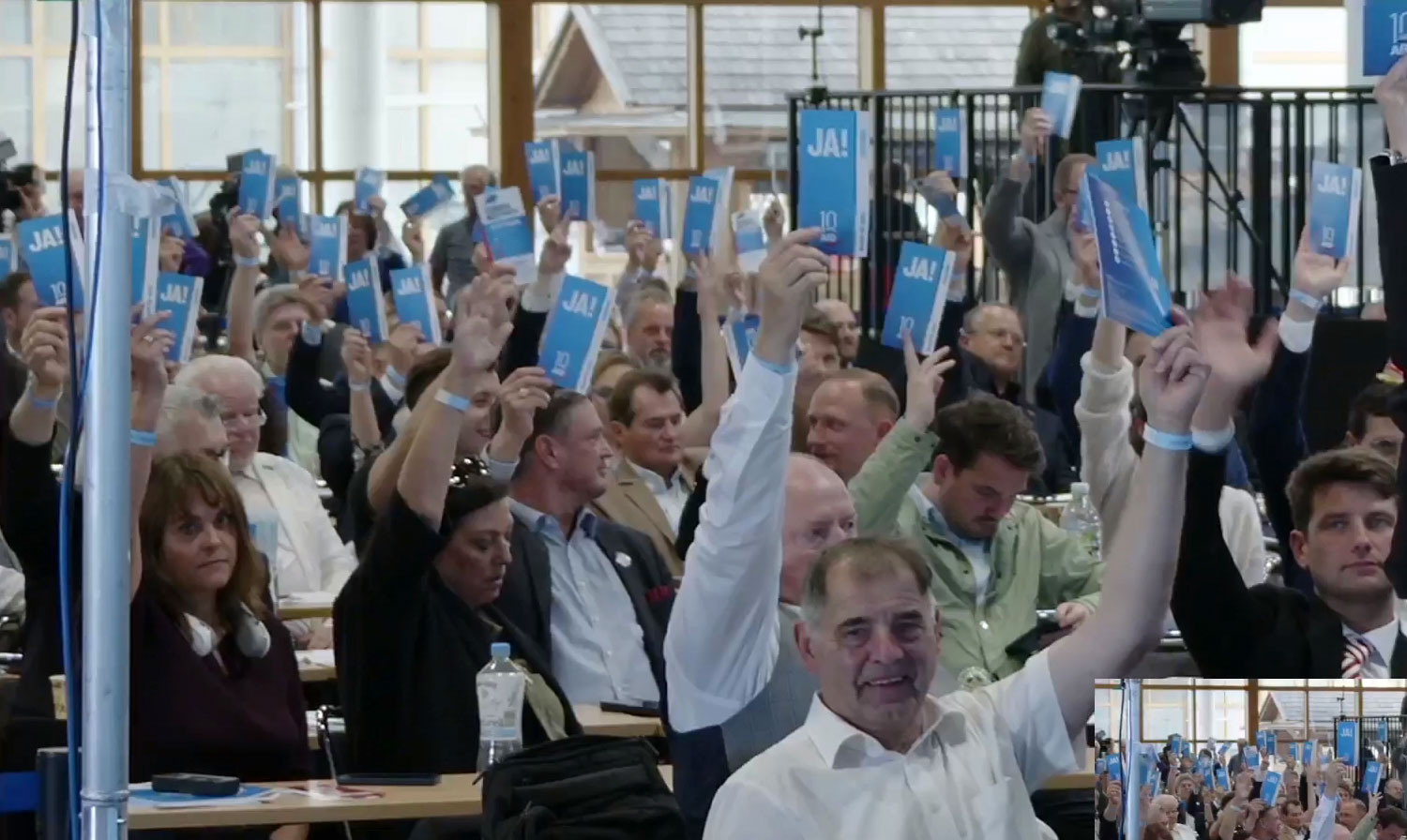
Strong Confidence in German AfD
Alternative for Germany (AfD) held a party conference on July 29-30 to select candidates for the upcoming EU election next year. EU Parliament member Maximilian Krah, belonging to the party's more radical, ethnonationalist faction, was appointed as the top candidate. The party's two spokespersons delivered powerful speeches criticizing the EU's failed migration policy and trade sanctions that isolate Europe and Germany from the rest of the world. They argued that it's time for the EU to return a significant portion of its power to national parliaments. However, they have dropped the demand for Germany to exit the EU.
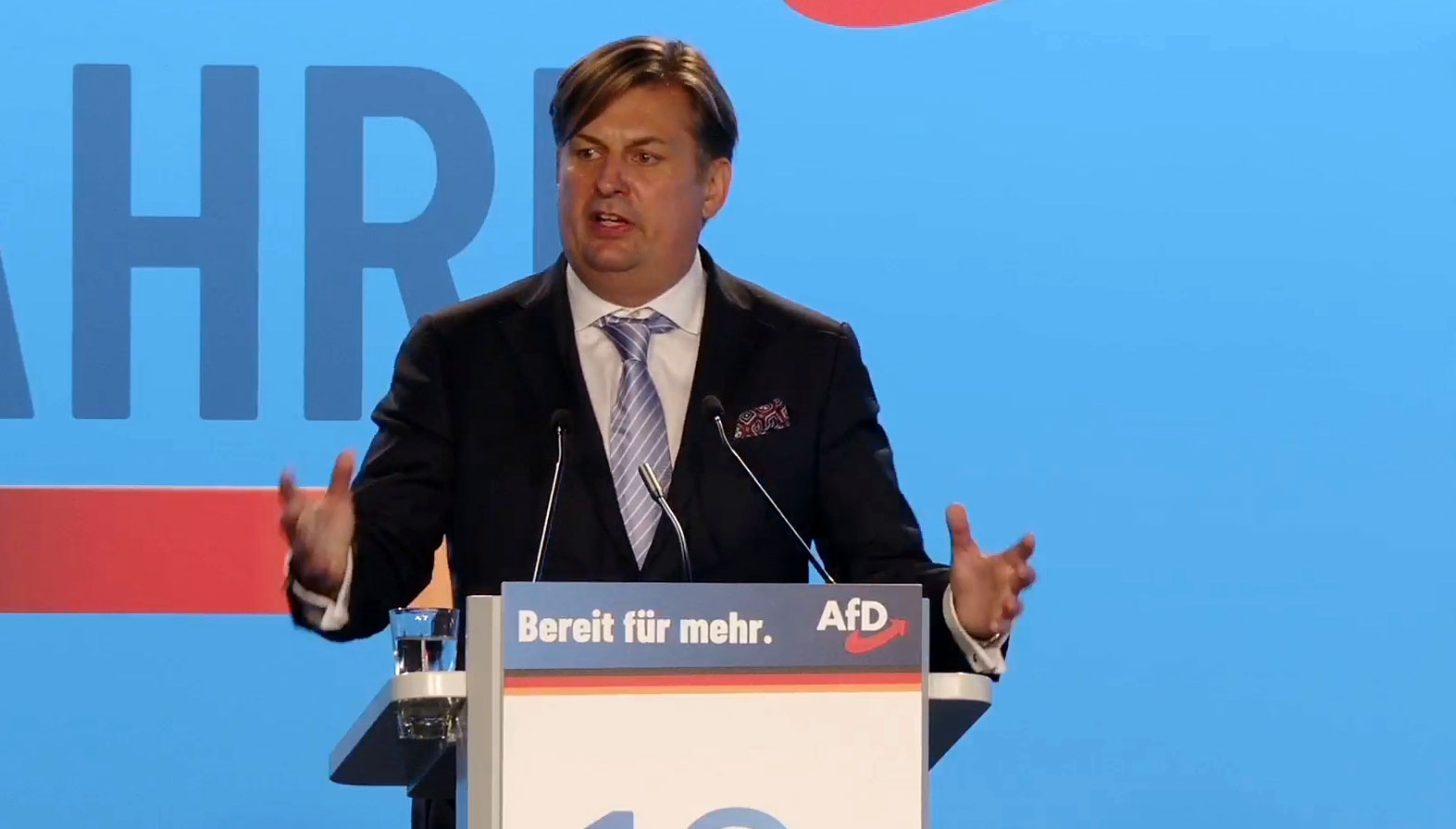
The Establishment Wants to Ban Germany’s Second Largest Party – for the Sake of Democracy
The rising popularity of AfD has raised strong concerns within the establishment. Despite lies and demonization in the media and isolation from the overall political establishment, the party continues to grow. Certain representatives of the party are accused of becoming increasingly "extreme," and in an unusual move, the influential weekly newspaper Der Spiegel demanded that AfD be "banned."

Dutch FvD break through the media blockade
What is happening in the Netherlands? It is often difficult to follow events in other countries, especially when distorted by system media. We give Forum for Democracy (FvD) the opportunity to speak out on the political situation in the Netherlands and the staunch resistance they face in trying to save the country.

The Ursula von der Leyen Affair
After a criminal complaint in Belgium against the President of the European Commission, the so-called SMS-case, now takes a new turn. The judge responsible for the investigation will likely gain access to the secret messages exchanged between Ursula von der Leyen and Albert Bourla, CEO of Pfizer, at least if they haven't been deleted.
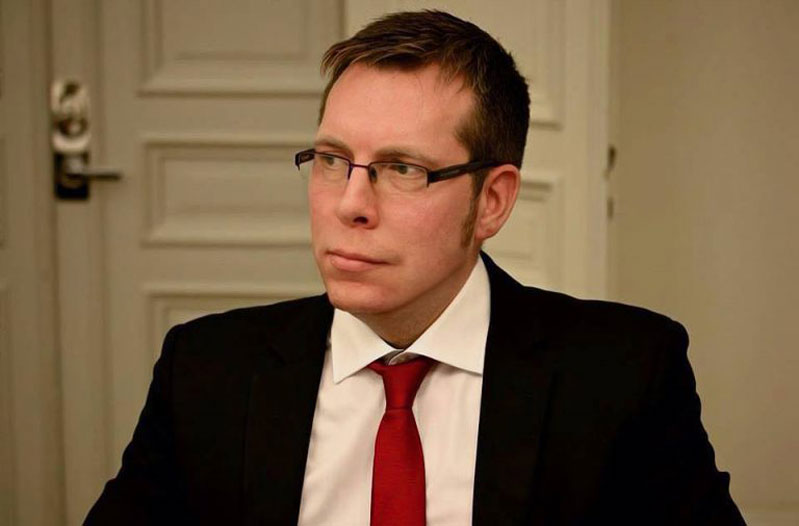
Publisher of Unique Literature Worldwide Blocked by International Distributor
Arktos has distinguished itself by publishing groundbreaking philosophers and social critics. Now, the publisher's international distributor has abruptly terminated the cooperation, and more than 400 already printed titles cannot reach their audience. There is strong evidence that the distributor has been under pressure, something that has also happened in Sweden. We have spoken with Arktos founder Daniel Friberg about the ongoing struggle for freedom of speech in a shrinking cultural corridor.
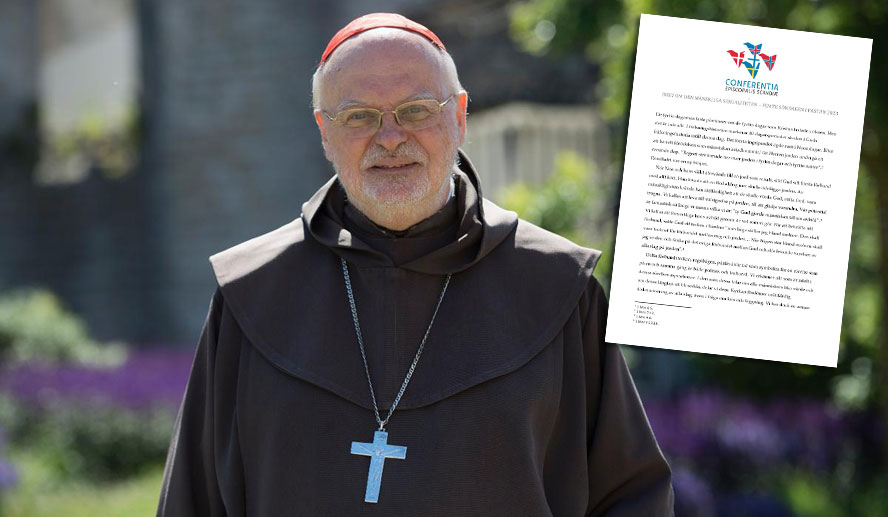
Care prompts bishops to criticize transgender ideology
The Catholic bishops of the Scandinavian countries presented an open five-page letter criticizing transgender ideology on March 21, just before Easter. The document primarily expresses care and advice and was read aloud in Catholic churches in Sweden, Norway, Finland, Denmark, and Iceland. Cardinal Anders Arborelius, Bishop of Stockholm, is one of the signatories of the document.
