


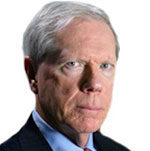


 Hungarian Prime Minister Viktor Orban. Wikipedia
‘Soros is practically dictating Brussels’ migration policy’
“The European Parliament’s fresh decision to increase funding for ‘Soros groups’ once again makes it clear that George Soros is practically dictating Brussels’ migration policy,” ruling Fidesz’s communications chief said on Thursday.
Published: January 18, 2019, 8:47 am
The EP’s proposal about suspending EU funds was heavily criticised by the Fidesz (Hungarian Civic Alliance) but hailed by left-liberal opposition MEPs.
Balazs Hidveghi reacted to a resolution passed by the European Parliament on tripling funding in the 2021-2027 financial period for NGOs dedicated to preserving democratic values. Under the resolution, eligible civil groups would get 1.8 billion euros in support instead of the originally planned 642 million euros.
Hidveghi insisted that Brussels wanted to increase funding for “Soros organisations” so that they could “bring even more migrants to Europe”. He said the vote was “yet more evidence that the EP’s pro-migration majority is following the Soros plan step by step”.
He added that Brussels was also preparing to reduce funding for “member states that go against Brussels’s migration policy” so that the money they withhold from those countries can be distributed among “the pro-migration Soros groups”.
Hungarian MEPs also commented on the EP’s draft law, according to which governments interfering with courts or failing to tackle fraud and corruption will risk suspension of EU funds. According to Fidesz MEP Tamas Deutsch, the EU can’t make a decision which would fight breaches of the rule of law by breaching the rule of law.
He said that the Hungarian government would never support such suspension of funds because it’s aimed at punishing member states who oppose Brussels’ pro-immigration policies and the „Soros plan”.
Italian Interior Minister Matteo Salvini has meanwhile been leading an effort to create a pan-European conservative alliance dubbed the “alliance of sovereignists” [alleanza di sovranisti] — with like-minded voters across Europe to contest the upcoming elections for the European Parliament.
The objective is to reassert national sovereignty by changing the political composition of the European Parliament, and by extension the EU’s executive, the European Commission, and eventually the European Council, where national leaders make the most important EU decisions.
Fidesz continues to be part of the European People’s Party, which has resisted calls to expel Orban for his eurosceptic and anti-immigration views. Orban’s spokesman Zoltan Kovacs hailed Salvini’s plans to create such an alliance.
“The Warsaw-Rome axis is a great development to which great hopes are linked. I would like Europe to have a political force to the right of the EPP, a Rome-Warsaw axis, capable of governing, capable of assuming responsibility and opposing immigration.”
Orban has been unwilling to leave the European People’s Party because, as the most powerful grouping in the European Parliament, it shields him from retribution from his pro-EU opponents.
Salvini and Orban have both pledged to create an “anti-immigration axis” aimed at countering the pro-migration policies of the European Union. Meeting in Milan on August 28, Orban and Salvini vowed to work together with Austria and the Visegrad Group — the Czech Republic, Hungary, Poland and Slovakia — to oppose a pro-migration group of EU countries led by French President Macron.
Members of the supranational European Parliament organise themselves into ideological groups as in national legislatures. There currently are eight political groups in the European Parliament.
The largest is the center-right European People’s Party (of which German Chancellor Merkel’s Christian Democratic Union is a key pillar), followed by Progressive Alliance of Socialists and Democrats, the European Conservatives and Reformists Group, and the Alliance of Liberals and Democrats for Europe (ALDE).
The recent decision by French President Emmanuel Macron’s political party, En Marche, to join ALDE could potentially make it the second largest bloc in the European Parliament, up from the fourth currently, after the May elections.
In Poland, Salvini met with Prime Minister Mateusz Morawiecki, Interior Minister Joachim Brudziński and Jarosław Kaczyński, the powerful leader of the governing Law and Justice (PiS) party, which currently is part of the European Conservatives and Reformists (ECR) group.
The ECR potentially faces collapse when its 18 British Conservative party Members of European Parliament (MEPs) depart after Brexit; this would leave the PiS without a grouping in the European Parliament.
The PiS is unlikely to join the European People’s Party because Poland’s main opposition party, the Civic Platform, is part of that grouping. As a result, the new Salvini-led group would be an attractive option for the PiS.
Salvini has already persuaded French and Dutch anti-immigration parties — Marine Le Pen’s National Rally (formerly known as National Front) and Geert Wilders’ Party for Freedom — to join.
If PiS and Austria’s ruling Freedom Party were to come on board, Salvini’s eurosceptic alliance could have up to 150 MEPs. This would make it the third largest group in the European Parliament and give it real power to influence EU legislation.
At a joint press conference, Salvini said: “Today begins a journey that will continue in the coming months for a different Europe, for a change of the European Commission, of European policies, which puts at the center the right to life, work, health, safety, all that the European elites, financed by [billionaire Hungarian philanthropist George] Soros and represented by Macron, deny.
“We are close to a historic turning point at the continental level.”
But Germany and France have responded to the challenge by doubling down on European integration. On January 10, The Times of London reported that Merkel and Macron are set to sign the so-called “Aachen Treaty” which will “herald a new era of integration”.
Marine Le Pen dismissed the new treaty as an “unbalanced” diktat from Germany, while Alexander Gauland, leader of the anti-mass-migration party Alternative for Germany, described it as an “erosion of our national sovereignty.”
All rights reserved. You have permission to quote freely from the articles provided that the source (www.freewestmedia.com) is given. Photos may not be used without our consent.
Consider donating to support our work
Help us to produce more articles like this. FreeWestMedia is depending on donations from our readers to keep going. With your help, we expose the mainstream fake news agenda.
Keep your language polite. Readers from many different countries visit and contribute to Free West Media and we must therefore obey the rules in, for example, Germany. Illegal content will be deleted.
If you have been approved to post comments without preview from FWM, you are responsible for violations of any law. This means that FWM may be forced to cooperate with authorities in a possible crime investigation.
If your comments are subject to preview by FWM, please be patient. We continually review comments but depending on the time of day it can take up to several hours before your comment is reviewed.
We reserve the right to delete comments that are offensive, contain slander or foul language, or are irrelevant to the discussion.
Europe

UK Braces for Blackout Apocalypse
The British state is openly conditioning the country for multi-day darkness, water failure and chaos — and it is making sure only its own voice reaches citizens when the grid dies.

Hackers Raise Temperatures in French Blood Banks
France’s national blood service said hackers accessed control systems overnight on Monday and raised temperatures and defrosting thresholds to “very high levels” at three cold stores holding vital blood products for over a million patients.

Supermarket Freezers Hacked Across At Least Seven European Countries
Supermarkets in Belgium, Sweden, Luxembourg, Ireland, the Netherlands, Finland and Estonia reported overnight refrigeration failures on 1–2 November 2026, with freezers and fridges remotely forced into defrost mode or set to extreme heat. Retailers discarded large quantities of chilled and frozen food after units reached 50°C (122°F) or higher in some locations.

EU Protests Continue Over Living Costs, Education, and Housing
Hundreds of thousands of people took to the streets across France, Germany, and Portugal this weekend in a widening wave of discontent focused on the high cost of living, underfunded schools, military conscription, and a severe housing crisis.

Czech Parliament Votes to Abolish Broadcasting Fees
In a decisive first-reading vote, the Czech Parliament has approved legislation to abolish mandatory broadcasting fees for public television and radio, marking a significant break from the traditional license-fee model that has long funded public service media across much of Europe.

UK Researcher Finds Ukraine’s Military Losses Far Exceed Russia’s
A PhD student at King’s College London’s Department of War Studies has argued that Ukraine has suffered significantly higher irretrievable casualties than Russia since the full-scale military operation began, challenging the widespread media narrative that Russian forces are taking the heavier toll.

Protests Spread to Portugal
Housing and cost-of-living protests linked to the wider European wave have reached Portugal.

Europe on Fire
Violent chaos that has gripped France for weeks after high-school protests, has spiraled into street warfare across the EU.

EU Capital Erupts as French Riots Cross Border
Observers agree: the violent riots that have been shaking France for weeks, and now also the Belgian capital Brussels, have nothing to do with school and youth unrest.

No comments.
By submitting a comment you grant Free West Media a perpetual license to reproduce your words and name/web site in attribution. Inappropriate and irrelevant comments will be removed at an admin’s discretion. Your email is used for verification purposes only, it will never be shared.